
How a pandemic disruption reshaped — and ultimately expanded — the making of El Cerrito del Norte

The rainscreen system was engineered to be light, thin, and weather-durable — qualities that made it efficient to ship. But the ambition was for more than flatness: the civic artwork required dimensionality, depth, and the re-direction of reflection — volumes that would catch, dissolve, and bend light across the transit hub. Fully fabricating those qualities locally had been the plan, until Covid closures shut down that capacity.
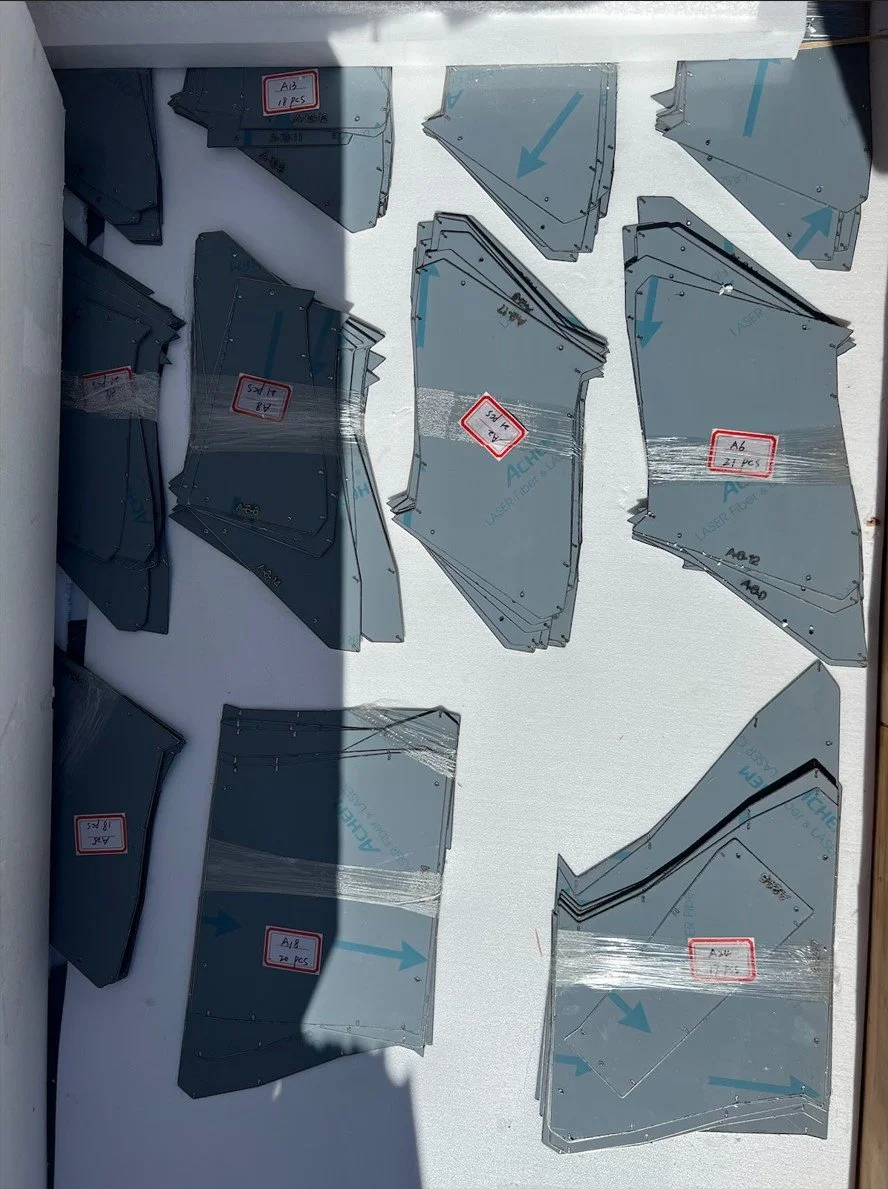

The pivot offshore could have flattened the vision, but instead it created opportunity. Offshore production delivered scale — large crates of precision-fabricated panels. At the same time, the project turned grassroots in Grass Valley: reflective Fresnel-like pieces were hand-folded in a small basement, scrappy and improvised. And on site, the building itself offered integration — its basement became the staging ground where offshore precision and local handwork converged, sequenced, and lifted directly into place.

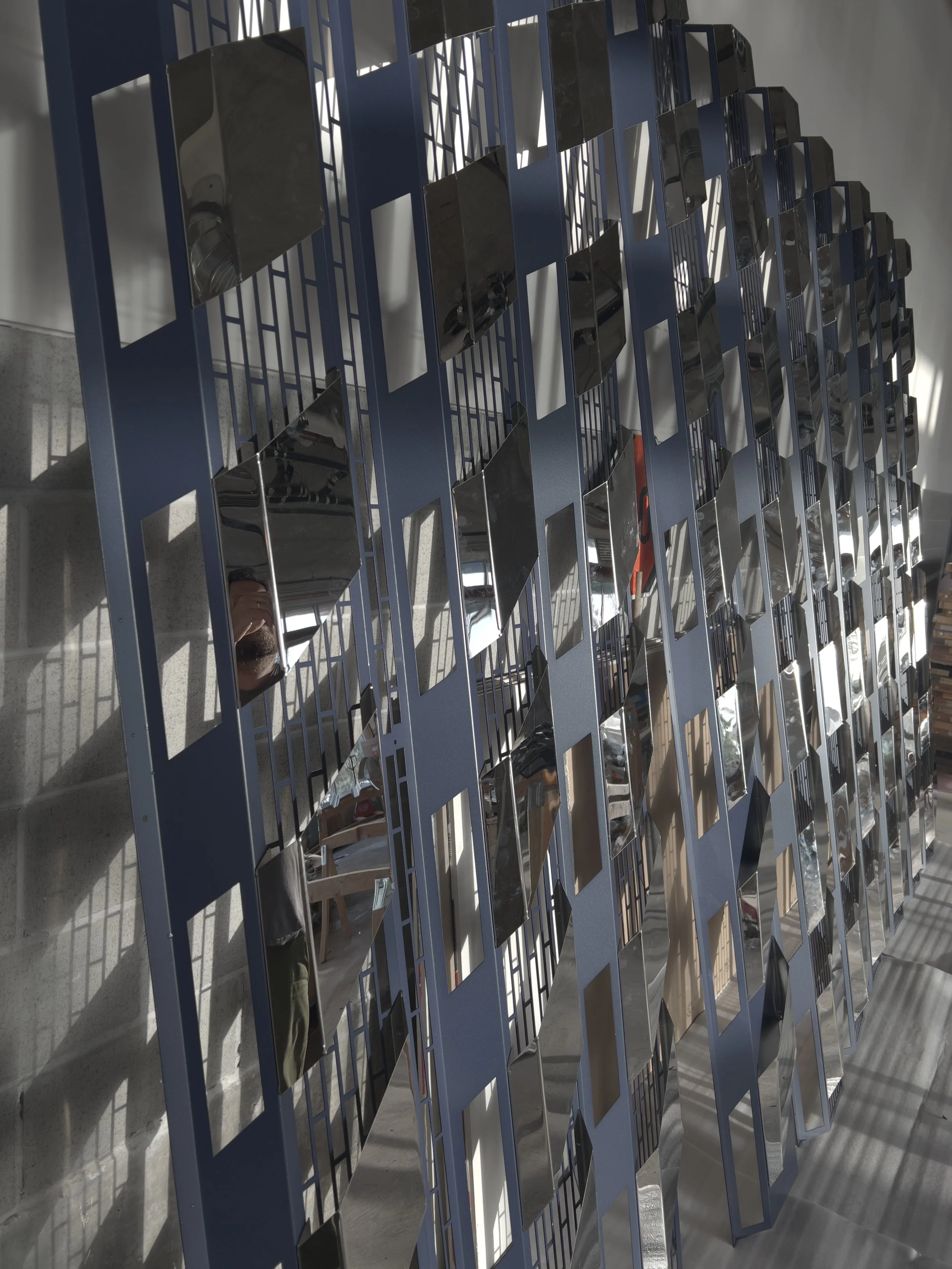
In effect, the project was inflated dimensionally in stages: shipped flat, folded by hand in basements, and expanded within the vessel of the building itself. This hybrid process not only preserved dimensionality but also broadened the project’s scope. And because the system integrated with the building envelope, it carried architectural responsibilities as well as artistic ones.

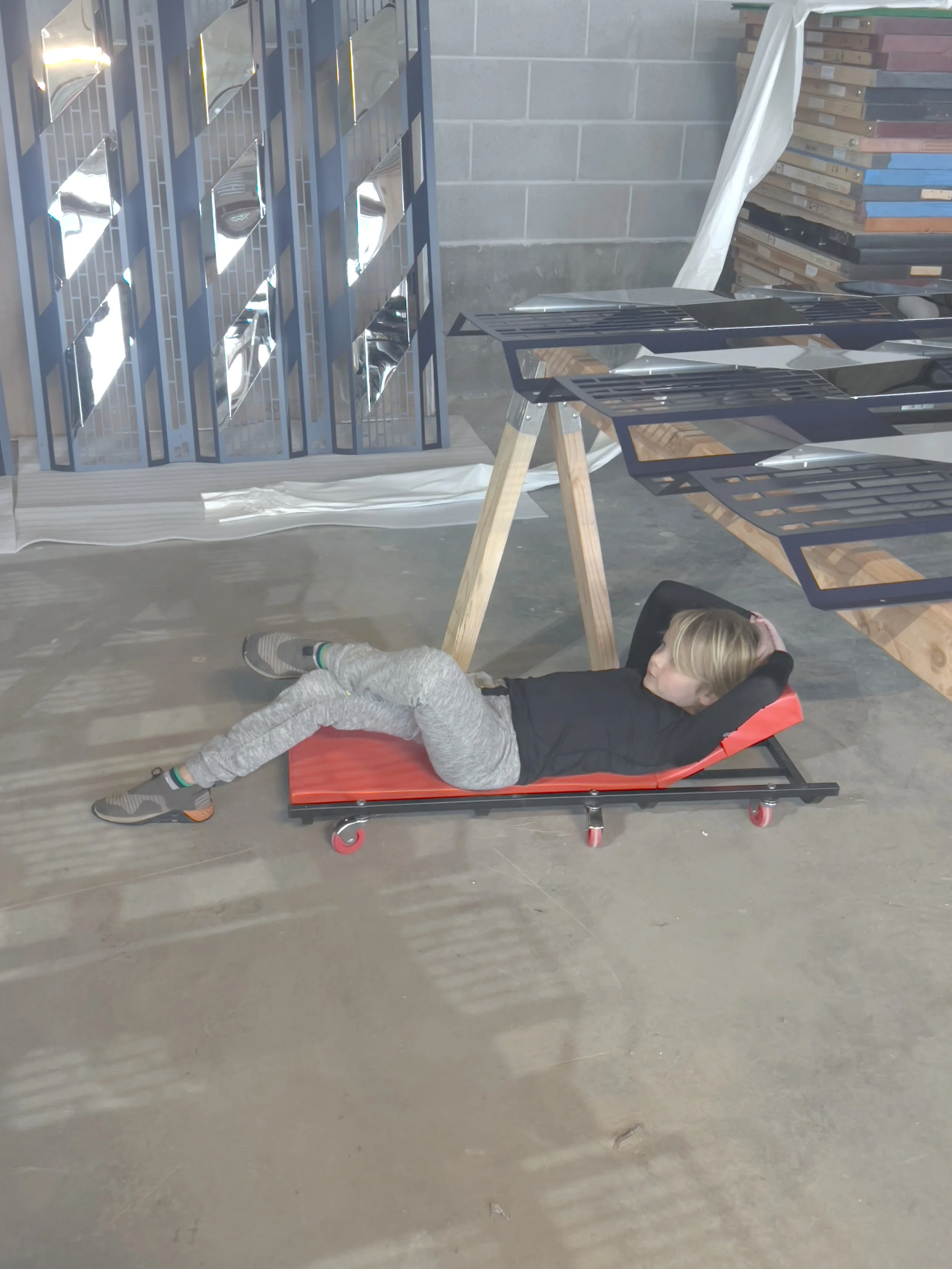
The result: a civic artwork at once global and grassroots — larger, more essential, and literally consumed by the building from the inside out.