

This project emerged at the friction point between neighborhood scale and metropolitan infrastructure. A seven-story mass pressed into a fabric of single-story storefronts provoked questions of presence, scale, and disruption. While the building’s “front” was staged for the street, its so-called “back” addressed something more consequential: a pedestrian greenway and one of the Bay Area’s busiest transit hubs. In effect, the back became the true front.


The response was not disguise but misdirection. Drawing on dazzle camouflage and fish-scale patterning, the façade becomes a cinematic device—an optical field that performs in sync with transit. Its reflective panels operate like a Fresnel lens: dissolving, redirecting, and compressing reflections as commuters pass. The distortions play left to right, right to left, keyed to the rhythm of BART tracks acting as visual datum. For those arriving or departing, the surface is never still—always fragmenting scale, redistributing attention, and staging a shifting encounter.


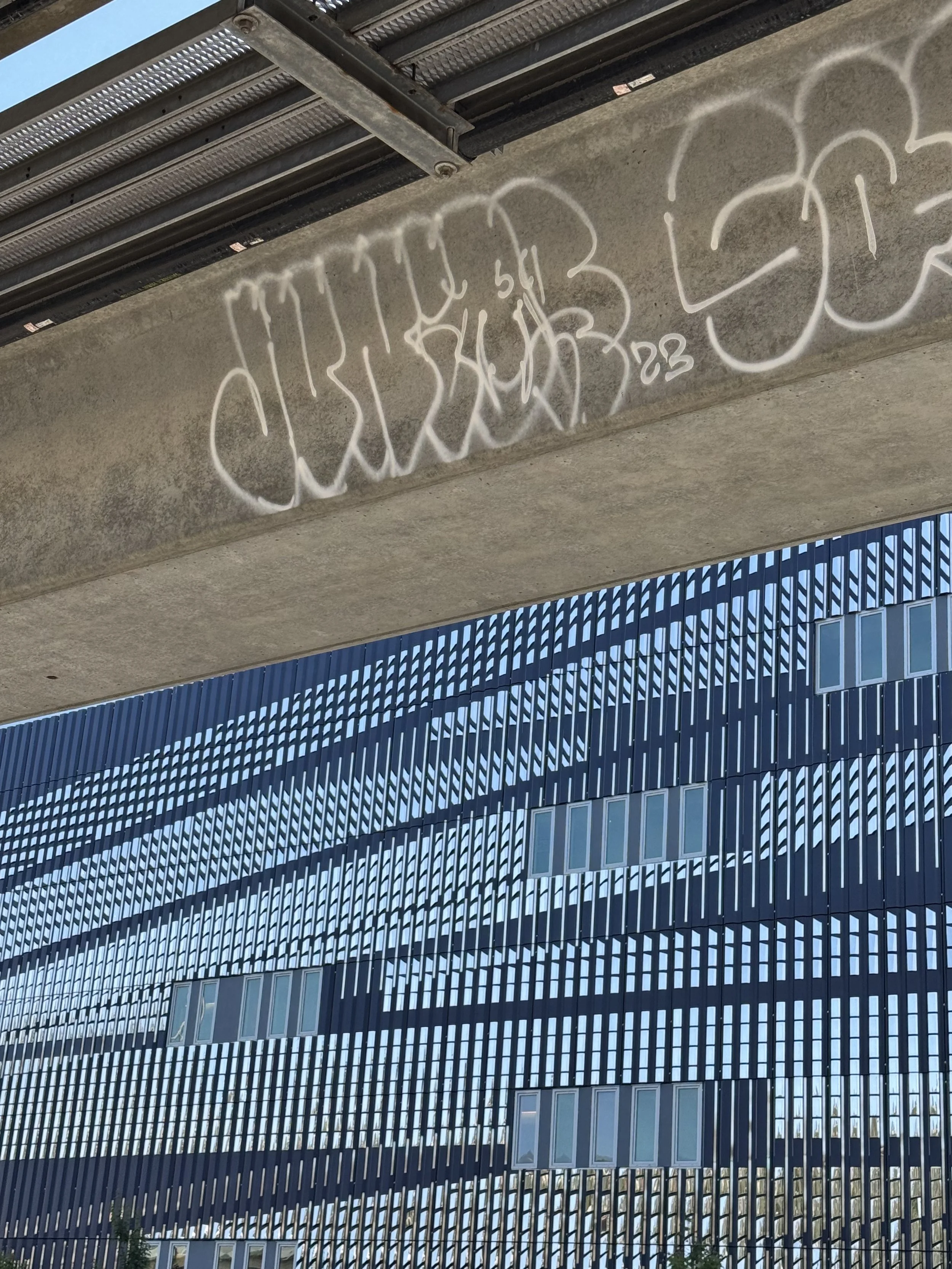

Public art here operates less as adornment and more as an act of re-orientation. When architecture struggles to reconcile its civic and commercial obligations, art can act as a prosthetic—an interpretive layer that restores missing DNA, adjusts misalignments, and re-tunes perception. It can redirect the eye, slow the pace, and invite reflection where infrastructure tends to erase it. In this sense, the façade is not simply responding to a building but recalibrating its relationship to context—using optical phenomena to mediate between the scale of the commuter and the scale of the metropolis.


The fabrication process mirrored this negotiation between precision and perception. Each stainless panel was laser-cut and bent along unique parametric curves, calibrated through scripting to produce controlled optical interference across the façade. The panels were then assembled as modular cassettes—engineered to ship flat, nest efficiently, and expand to full dimension on site. This hybrid workflow, bridging digital modeling with physical assembly, allowed local and offshore teams to work interchangeably on the same geometry, maintaining fidelity across distance.
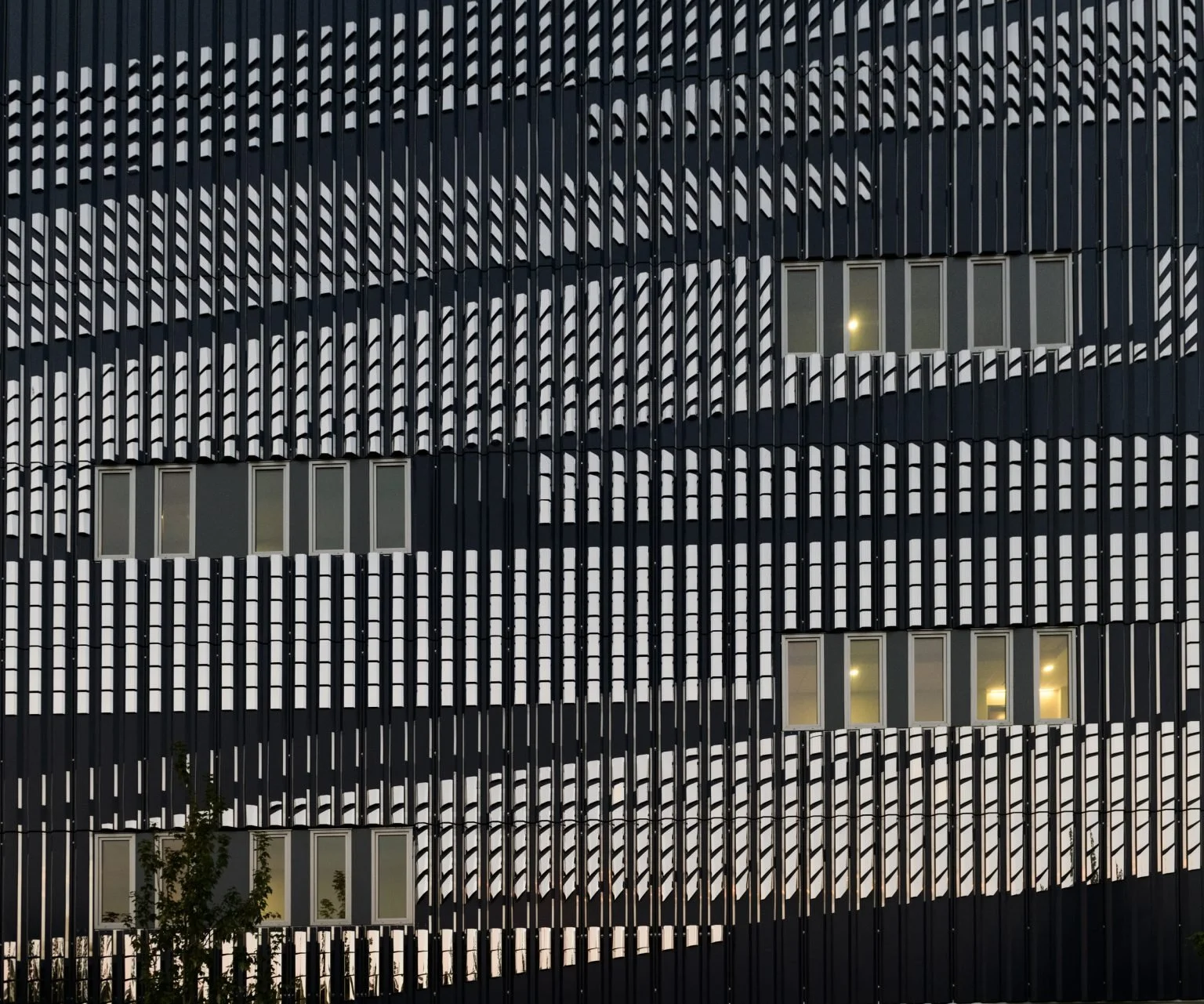


What emerges is less a façade than a lens—one that folds public art and architecture into a shared field of experience. Rather than a fixed image, it offers a choreography of reflection and movement that turns infrastructure into theater. The work stands as a reminder that public art can function as urban tuning: subtle, corrective, and perpetually in motion.


